Can a Mac read ext4? How do I mount an ext4 drive on macOS?
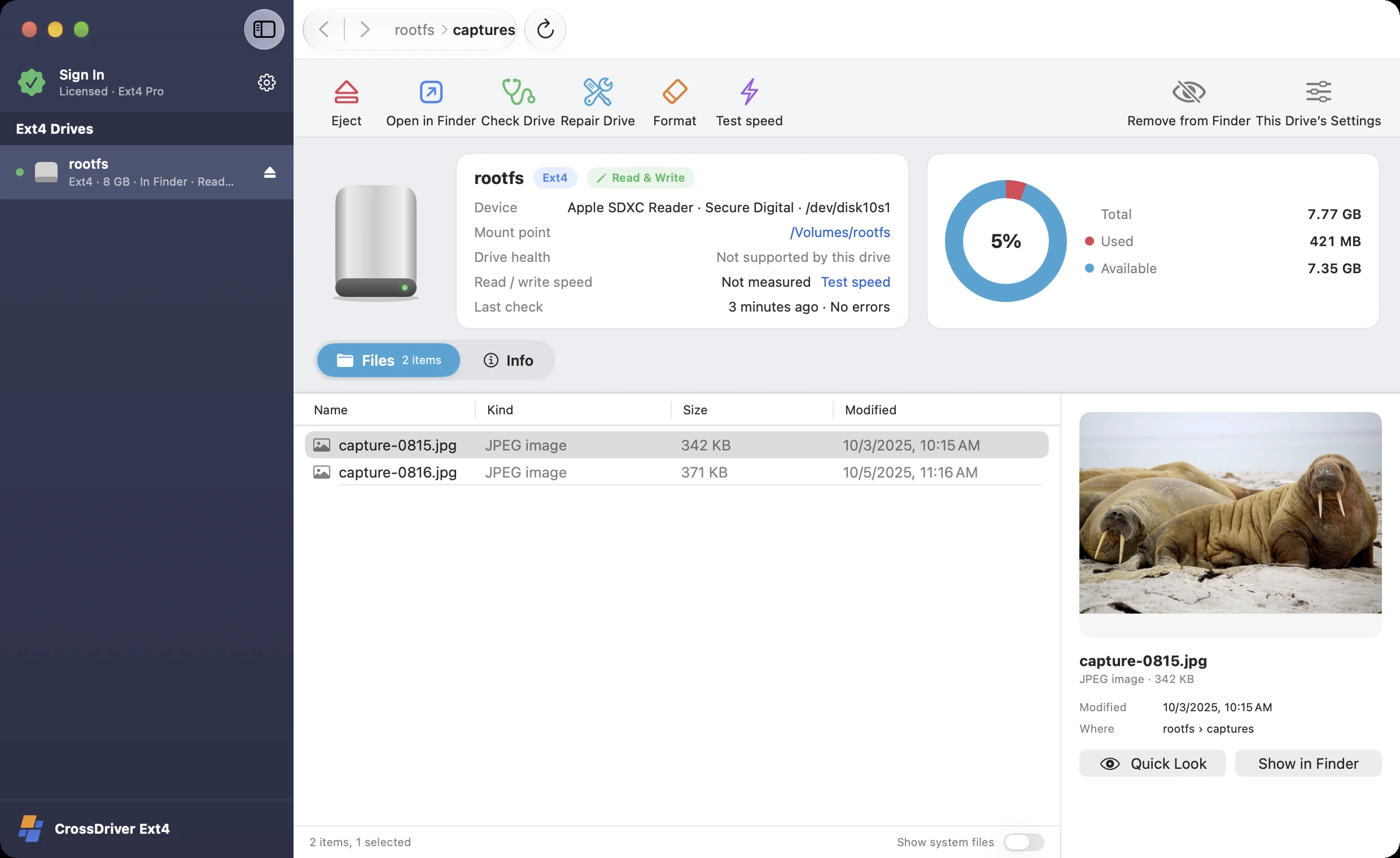
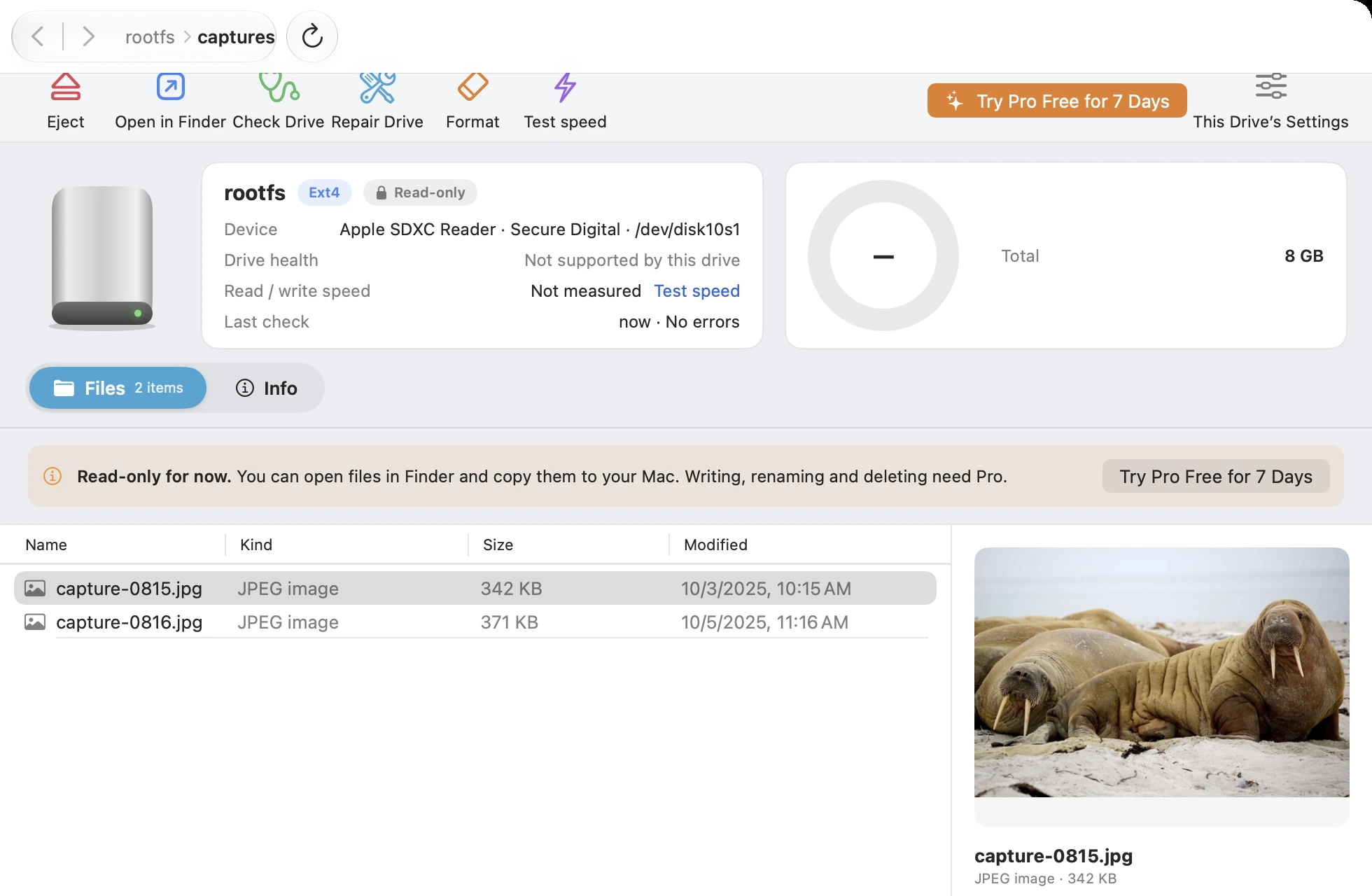
macOS doesn't support Ext4, so when you plug one in you'll see "The disk you attached was not readable by this computer." Click "Ignore" — don't initialize it. Once CrossDriver Ext4 is installed, the disk appears in the sidebar automatically; click "Open Disk" to browse it in Finder. The free version is read-only; Pro can read and write. For full steps and a comparison with other options (virtual machines, command-line tools), see How to open Ext4, XFS and other Linux drives on a Mac.
Plugged a Raspberry Pi SD card into your Mac and only see the boot partition?
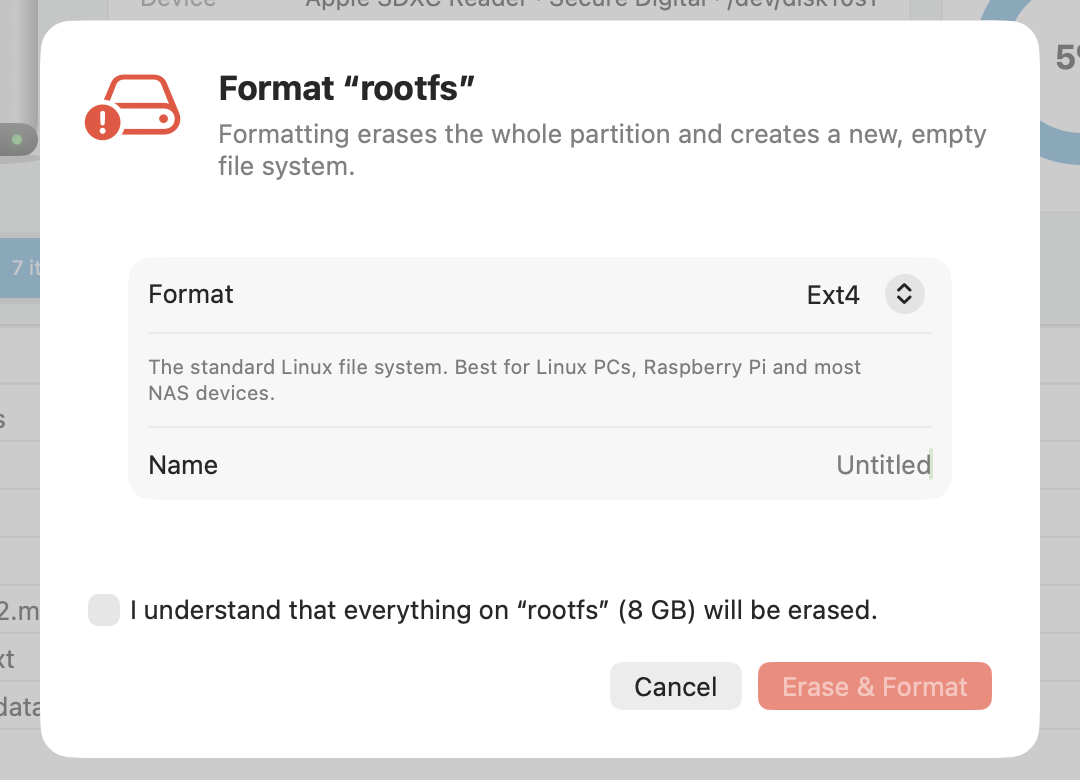
The boot (bootfs) partition on a Raspberry Pi SD card is FAT, which your Mac can read directly. The rootfs partition, which holds the system and your files, is Ext4 — you need CrossDriver Ext4 to open and edit it.
Can my Mac open drives attached to OpenWrt routers, download boxes or TV boxes?
Drives attached to these devices often use Ext4 (sometimes NTFS or exFAT). If your Mac says "The disk you attached was not readable by this computer.", it's most likely Ext4: click "Ignore" and open it with CrossDriver Ext4. If it's NTFS, use CrossDriver NTFS.
Are Ext2 and Ext3 supported?
Yes. Ext2, Ext3 and Ext4 can all be browsed, read and written; formatting is available for Ext4.
Could it damage my Ext4 disk?
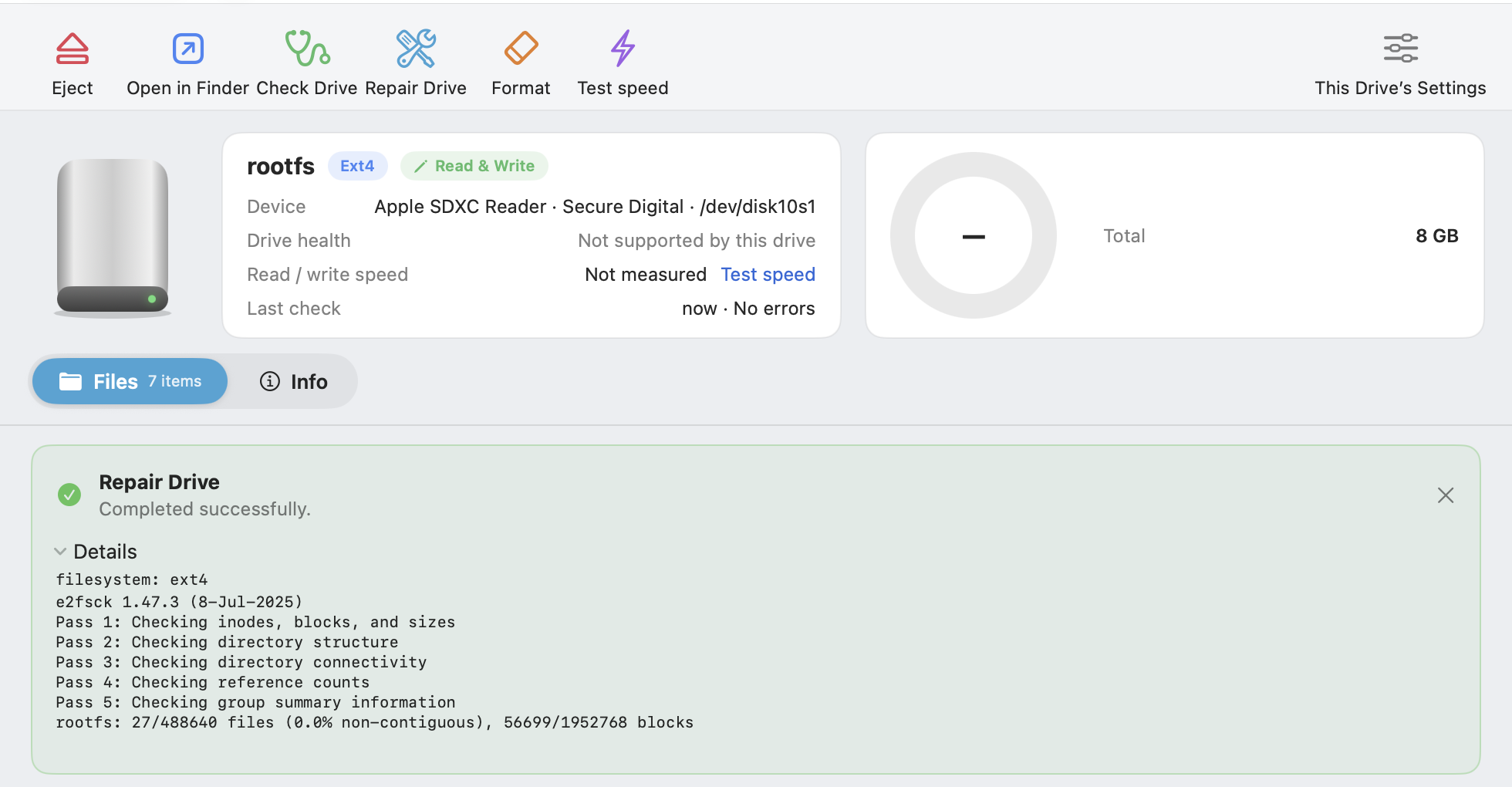
Writes are handled by the Linux kernel's native Ext4 driver with journaling protection. Click "Eject" before unplugging and the engine writes your changes back to the disk first. If the disk is ever disconnected unexpectedly, use the built-in check and repair.
What tool does check and repair use?
It's e2fsck, the official Linux tool — exactly the same as running it on a Linux computer, with progress and full logs visible.
Can it open Steam Deck microSD cards?
Not yet. Steam Deck microSD cards use the casefold (case-insensitive) feature, which isn't supported yet.
How does it look different in Finder?
The disk shows up in Finder as a network disk; opening, copying, editing and saving work just like on a regular disk.
Are newer features like 64bit and metadata_csum supported?
Yes. Disks are read and written by the Linux kernel's native driver, so Ext4 created by default on recent Linux distributions opens fine.
Will files written from a Mac work normally back on Linux?
Yes. Files are written by Linux's own Ext4 driver, just as if they were written on a Linux computer.
How many disks can I open at once?
One at a time for now. When you switch to another disk, the current one is saved and ejected first.
Can I open a Synology drive directly with CrossDriver Ext4?
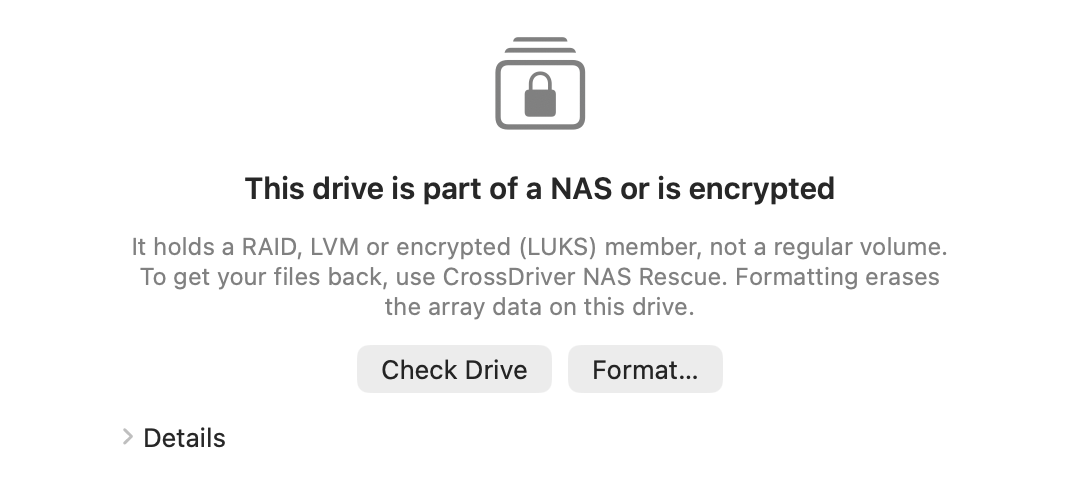
Synology data usually sits on top of RAID or LVM, so a single drive can't be mounted directly. Use NAS Rescue, which rebuilds the array read-only.
Does it work on M1–M6 Macs? Do I need to disable SIP or install a kernel extension?
Yes, it works — and no, you don't. CrossDriver runs natively on Apple silicon Macs such as M1–M6 as well as Intel Macs, on macOS 12 Monterey, 13 Ventura, 14 Sonoma, 15 Sequoia, 26 Tahoe and later. It uses macOS's built-in virtualization framework to run an isolated, lightweight engine that reads and writes your disks — no kernel extension, no disabling SIP, no changes to any security settings, and no restart after installing.
Can I try Pro first?
Yes. CrossDriver NTFS, Ext4, XFS and All in One all offer a free 7-day Pro trial in the app — once per Mac, no payment details required. After the trial ends, your disks remain accessible read-only and your files are unaffected.
How is it different from the Classic edition on crossdriver.com?
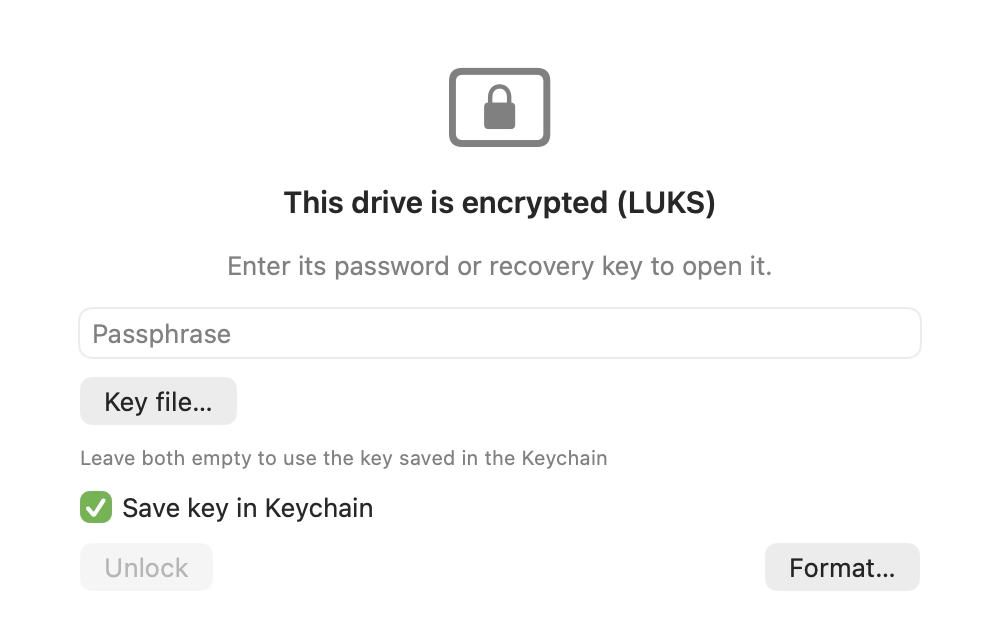
Classic is CrossDriver's kernel edition: it runs as a kernel extension and is the fastest, but requires lowering system security on Apple silicon Macs. The new generation doesn't rely on kernel extensions, runs at near-kernel speed, gives read-only access in Finder even in the free version, and has repair, formatting and encrypted-disk unlocking built in — at two-thirds the price of Classic. Both generations remain available; if you've already bought Classic, please refer to the Classic product page.
What should I do before unplugging?
Click "Eject" in the sidebar or on the disk page. CrossDriver writes your changes back to the disk first, then lets you know it's safe to unplug.
If I buy All in One, do I still need to buy NTFS, Ext4 or XFS separately?
No. An All in One Pro license also covers CrossDriver NTFS, Ext4 and XFS.
Does it work with Seagate, WD (Western Digital), Toshiba, Samsung T7, SanDisk and other brands?
Yes. Whether a disk opens depends only on its format, not on brand, capacity or connection: external hard drives, portable SSDs, USB flash drives, SD cards, and SATA / NVMe drives in an enclosure all work, over USB or Thunderbolt.